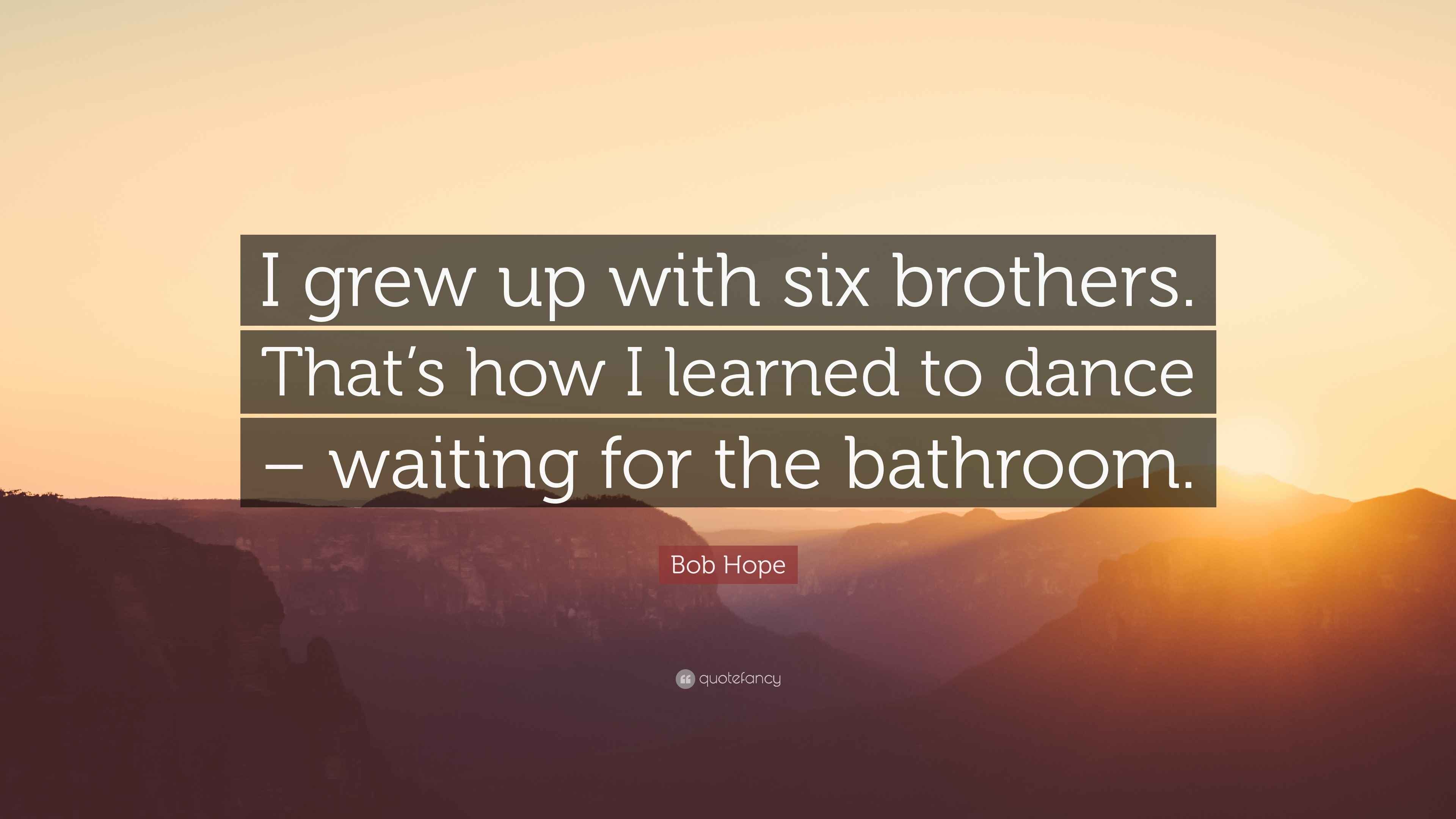
Growing up in a crowded household isn’t just about shared bathrooms and bunk beds—it’s a masterclass in timing, survival, and reading the room. That’s exactly what legendary entertainer Bob Hope captured in his famous quip: “I grew up with six brothers. That’s how I learned to dance—waiting for the bathroom.”
On the surface, it’s pure comedic relief. But beneath the punchline lies a deeper truth about how early family dynamics shape our understanding of relationships, patience, and even how we navigate the absurdities of politics and aging. This quote isn’t just a nostalgic laugh—it’s a lens into the human condition, delivered with the precision of a seasoned comic who knew that humor often carries the heaviest truths.
Let’s unpack why this single line continues to resonate and what it reveals about the unspoken rules of life.
The Genius of Bob Hope’s Timing and Delivery
Bob Hope wasn’t just a comedian—he was a cultural architect of American humor during the 20th century. From his vaudeville roots to decades of USO tours and radio shows, Hope perfected the art of the one-liner. His delivery? Crisp, self-deprecating, and disarmingly relatable.
The bathroom joke works because it’s universally understood. Anyone who’s lived in a large family knows the unspoken choreography of shared spaces—anticipating moves, reading signals, stepping in only when the coast is clear. It’s not just about waiting; it’s about rhythm.
But Hope frames it as dancing—a metaphor that elevates the mundane into art. That’s where his genius lies: turning scarcity into elegance, competition into coordination. It’s a subtle lesson in emotional intelligence long before the term was coined.
Family as the First Teacher of Relationships
Growing up with six brothers didn’t just teach Bob Hope comedy—it taught him human behavior.
In large families, you learn early that conflict isn’t avoidable; it’s inevitable. What matters is how you navigate it. Sibling rivalry, alliances, negotiations over chores or the last slice of pie—these are the training grounds for adult relationships.
Consider the dynamics at play in Hope’s household: - Hierarchy and status – Older brothers set rules, younger ones test them. - Alliances and betrayals – Temporary truces form over common enemies (like parents enforcing bedtime). - Nonverbal communication – A glance, a smirk, or a well-timed cough can convey volumes.
These are the same skills we use in partnerships, workplaces, and friendships. The ability to “dance” in conversation—knowing when to speak, when to pause, when to let someone else take the lead—is forged in moments like waiting for a bathroom.
Modern psychology backs this up. Studies show that siblings contribute significantly to emotional regulation and social competence. Bob Hope didn’t need a therapist to tell him that—he lived it.
Waiting as a Life Skill: Patience in a World of Instant Gratification

Hope’s joke hinges on waiting—a concept increasingly foreign in the age of instant streaming, same-day delivery, and real-time messaging.
In his era, waiting was a fact of life. You waited for the radio show, the weekly movie, the monthly paycheck. Today, we’ve engineered impatience into our systems. And yet, the most meaningful things still require time: trust in a relationship, mastery of a skill, recovery from loss.
The bathroom line wasn’t just inconvenient—it was a forced pause. And in that pause, kids learn anticipation, self-control, and, sometimes, creativity (like reading a comic book upside down to pass the time).
This applies directly to modern life: - In relationships, rushing intimacy often leads to missteps. The best connections develop through shared timing, not forced momentum. - In careers, overnight success is a myth. Most achievements come after years of “waiting”—learning, failing, refining. - In politics, knee-jerk reactions dominate headlines. But lasting change? That requires the patience of someone who’s learned to wait their turn—and pick the right moment to act.
Aging with Humor: How Comedy Helps Us Grow Older Gracefully
Bob Hope was already in his 70s when he began delivering some of his sharpest jokes about aging.
“You know you’re getting old when you stoop to tie your shoelaces and wonder what else you could do while you’re down there.”
His ability to laugh at himself—his body, his memory, his relevance—wasn’t just a performance tactic. It was a survival strategy.
And his bathroom dance quote takes on new meaning as we age. The things we once waited for—promotions, marriage, children—give way to new forms of waiting: medical results, grandchildren’s phone calls, the next good day.
Humor becomes a tool to reframe the loss of control. When your body doesn’t move as fast, you joke about it. When your memory falters, you turn it into a punchline. Just as Hope turned a cramped bathroom schedule into a metaphor for rhythm, aging adults can transform limitations into stories.
Research consistently shows that laughter reduces stress, boosts immunity, and improves social bonding—critical tools as we grow older. Bob Hope didn’t just entertain the elderly; he taught them how to stay light on their feet.
Politics and the Art of the Well-Timed Jab
Hope was famous for his political humor, delivering roasts at presidential inaugurations for decades. He joked about Eisenhower, Nixon, Reagan—sometimes walking a fine line between satire and respect.
His bathroom joke, though not overtly political, contains the same DNA: an observation about systems, power, and the absurdity of shared resources.
In politics, “waiting your turn” is both a virtue and a frustration. Democracies run on turns—elections, legislation, public debate. But in an era of polarization, that dance breaks down. People stop waiting. They interrupt. They refuse to yield.
Hope’s humor reminds us that even in competition, there’s a rhythm. A good comedian knows when to land the punchline. A good leader knows when to speak—and when to listen.
His legacy suggests that political discourse might improve if we all remembered how to dance: staying in step, aware of others, moving forward without stepping on toes.
Why This Quote Still Resonates Today
In 2024, family structures have changed. Many people grow up with no siblings, or in blended households, or as digital natives more accustomed to texting than sharing a living room.
Yet the core of Hope’s joke remains relevant: life is about navigating crowded spaces—physical, emotional, digital.
Whether it’s: - Waiting for a promotion while others advance - Navigating a group chat where everyone talks over each other - Trying to get a word in during a family Zoom call
The dance continues.
And humor? It’s still the best way to keep your balance.
Real-Life Applications of the “Bathroom Dance” Mindset
You don’t need six brothers to benefit from this lesson. Here’s how to apply it:
- In Conflict Resolution
- Instead of reacting in the heat of the moment, pause. Let the other person finish. That silence? It’s your dance step.
- In Leadership
- Great leaders don’t dominate the conversation. They create space, listen, and step in at the right moment—like a well-timed punchline.
- In Dating
- Rushing to declare love or demand commitment breaks the rhythm. Let the relationship develop its own timing.
- In Social Media
- Before posting a hot take, ask: Is this my turn to speak? Or am I cutting in line?
- In Aging
- Accept that some things take longer now. Use the wait to observe, reflect, and—when appropriate—crack a joke.
The Last Laugh: What We Can Learn from Bob Hope’s Legacy
Bob Hope’s career spanned nearly 80 years. He saw wars, cultural revolutions, and the rise of new media. Through it all, he held onto one constant: the belief that laughter makes life bearable—and often, more meaningful.
His bathroom joke isn’t just a throwaway line. It’s a philosophy: - Life is crowded. - You will wait. - You might as well make it graceful.
In a world that rewards speed, noise, and self-promotion, Hope’s humor teaches restraint, observation, and timing. These aren’t just comedy skills—they’re life skills.
And perhaps that’s the greatest punchline of all: the things we dismiss as trivial—like waiting for a bathroom—might be where we learn to live well.
Final Thought: Dance When You Can
You won’t always control the pace of life. But you can control your rhythm.
The next time you’re stuck in a long line, a tense meeting, or a moment of personal uncertainty, remember Bob Hope—not just the punchline, but the principle behind it.
Learn the dance. Wait your turn. And when the moment comes—step in with confidence, and maybe a little humor.
FAQ
What should you look for in Bob Hope’s Quote of the Day: Humor That Teaches Life Lessons? Focus on relevance, practical value, and how well the solution matches real user intent.
Is Bob Hope’s Quote of the Day: Humor That Teaches Life Lessons suitable for beginners? That depends on the workflow, but a clear step-by-step approach usually makes it easier to start.
How do you compare options around Bob Hope’s Quote of the Day: Humor That Teaches Life Lessons? Compare features, trust signals, limitations, pricing, and ease of implementation.
What mistakes should you avoid? Avoid generic choices, weak validation, and decisions based only on marketing claims.
What is the next best step? Shortlist the most relevant options, validate them quickly, and refine from real-world results.

:max_bytes(150000):strip_icc():focal(728x145:730x147)/malcolm-in-the-middle-reboot-justin-berfield-erik-per-sullivan-frankie-munz-bryan-cranston-032625-ba641070781e4402978a76b2ed030e7c.jpg)